
In modern genomics, DNA library preparation is the foundation for high-throughput sequencing, making it a critical step in next-generation sequencing (NGS) workflows. A DNA Library Kit enables researchers to prepare DNA samples by fragmenting the DNA, attaching sequencing adapters, and amplifying the DNA. This prepared library allows sequencing machines to read and analyze genetic material, opening up possibilities for in-depth research across many fields, from cancer genomics to microbial studies.
DNA Library Kits are indispensable in a variety of applications, including whole-genome sequencing, targeted sequencing, exome sequencing, and metagenomics. Proper library preparation ensures efficient and high-quality data output from sequencing platforms, thereby improving the accuracy of downstream analysis (NIH, NCBI).
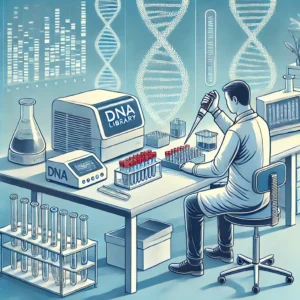
Detailed Steps in DNA Library Preparation
The process of DNA library preparation involves several key steps, each of which impacts the quality and quantity of the final sequencing data:
- DNA Fragmentation: The DNA sample is broken into smaller fragments through mechanical shearing, sonication, or enzymatic methods. The size of the fragments is crucial for accurate sequencing and varies depending on the platform and application. Fragment sizes typically range from 150 to 500 base pairs (CDC).
- End Repair and A-tailing: The fragmented DNA has uneven ends, which need to be polished. End repair involves enzymatically filling in or removing overhanging bases, ensuring blunt ends. After end repair, a single adenine base (A) is added to the 3′ ends of the fragments, facilitating adapter ligation (NIH NCBI).
- Adapter Ligation: Short sequences known as adapters are ligated to both ends of the DNA fragments. These adapters are essential because they contain binding sites for the sequencing primers and barcodes that enable the identification of different samples within the same sequencing run (NIAID).
- PCR Amplification: The library undergoes PCR amplification to increase the number of adapter-ligated fragments. This step is critical to ensure there is sufficient DNA for sequencing. PCR is typically optimized to avoid over-amplification, which could introduce bias (PubMed).
- Quality Control and Quantification: Before sequencing, the final library is assessed for quality. The size distribution of the fragments is evaluated using techniques such as bioanalyzers or gel electrophoresis. Quantification methods, including qPCR and fluorescence-based assays, are used to determine the library concentration (NIH Research).
Advanced Applications of DNA Library Kits
DNA Library Kits are used for an array of advanced applications that offer powerful insights into genetics and biological systems. These include:
- Whole-Genome Sequencing (WGS): This application enables the sequencing of an organism’s entire genome, providing a comprehensive view of its genetic makeup. It is especially useful in studying complex traits, disease-causing mutations, and evolutionary biology (NIH Genetics).
- Exome Sequencing: Exome sequencing focuses on the coding regions of the genome, which represent only 1-2% of the entire genome but harbor the majority of disease-related mutations. This technique is particularly valuable in genetic disease diagnosis and personalized medicine (NIAID Research).
- Targeted Sequencing: Targeted sequencing allows researchers to focus on specific regions of interest within the genome, such as cancer-related genes or hereditary disease markers. This approach is often used in diagnostics and for cost-effective genome analysis (FDA Animal Veterinary).
- Metagenomics: Metagenomics involves sequencing DNA from environmental samples, such as soil, water, or the human microbiome. It enables the study of microbial communities and their interactions, offering insights into biodiversity, antibiotic resistance, and ecosystem health (CDC Metagenomics).
- RNA Sequencing (RNA-Seq): While the focus is primarily on DNA, some DNA Library Kits can also be adapted for RNA sequencing. In RNA-Seq, RNA is first converted to complementary DNA (cDNA) before proceeding with library preparation. This allows researchers to study gene expression and transcriptome profiling (NIH NCBI).
Key Features of DNA Library Kits
- High Efficiency in Adapter Ligation: The design of these kits optimizes the ligation process, ensuring that a high proportion of DNA fragments receive adapters and are ready for sequencing (FDA Research).
- Low Input DNA Requirement: Modern kits often require only small amounts of starting material, making them suitable for working with precious samples such as formalin-fixed paraffin-embedded (FFPE) tissue or clinical biopsy specimens (NIH Research).
- Platform Versatility: DNA Library Kits are compatible with a variety of sequencing platforms, including Illumina, Ion Torrent, and Pacific Biosciences, ensuring flexibility in research workflows (CDC NGS).
- Automation-Compatible: High-throughput laboratories can integrate DNA Library Kits into automated platforms, increasing efficiency and reducing hands-on time for large sequencing projects (NIH).
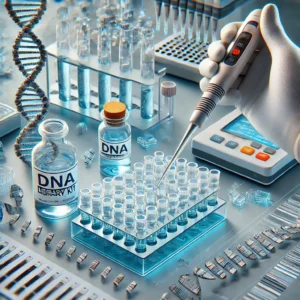
Quality Control in Library Preparation
Ensuring the quality of the DNA library is critical for successful sequencing. Common QC measures include:
- Fragment Analysis: Bioanalyzers or gel electrophoresis are used to check the size distribution of DNA fragments to ensure they meet the specifications for the sequencing platform (NIH NCBI).
- Quantification: Accurate quantification is essential to avoid overloading or underloading the sequencer. Methods like qPCR, fluorometric assays, and spectrophotometry are commonly used (CDC QC).
Future Directions in DNA Library Kits
As sequencing technologies continue to evolve, DNA Library Kits are advancing to accommodate new challenges and opportunities in genomics. Emerging trends include:
- Single-Cell Sequencing: Kits optimized for single-cell genomics are becoming increasingly popular, allowing researchers to study gene expression and genomic variations at the level of individual cells (NIH Single Cell).
- Long-Read Sequencing: New kits are being developed to support long-read sequencing platforms like Pacific Biosciences and Oxford Nanopore, which provide greater insights into structural variants and repeat-rich regions of the genome (NIH NCBI).
- Epigenomics: Some DNA Library Kits are being tailored to capture epigenetic modifications, such as DNA methylation, offering insights into gene regulation and disease states (NIH Epigenetics).
Conclusion
The DNA Library Kit is a pivotal tool in genomics, enabling researchers to prepare DNA for sequencing with high accuracy and efficiency. From whole-genome sequencing to targeted and metagenomics applications, DNA Library Kits continue to drive advancements in research, diagnostics, and personalized medicine. As NGS technologies continue to develop, these kits will play an increasingly important role in unlocking new insights into genetics and the molecular mechanisms underlying diseases and biological processes (NIAID Research).